Zavarco's Independent Physical Review of VTEL/Aries Coastal Terrestrial Fibre Optic Network
Zavarco Plc’s Independent Site Inspection in Dec 2025 that produced an Independent Expert Rebuttal Report, showing network evidenced with thousands of pictures and documented proof


The Resilient Legacy of Aries Telecoms' Fibre Optic Network: A Story of Innovation, Operation, and Enduring Evidence
In the dynamic landscape of Malaysia's telecommunications sector, the story of Aries Telecoms (M) Berhad—formerly V Telecoms Berhad—stands as a testament to visionary engineering and commercial success. As detailed in Zavarco Plc's independent report dated January 2026, this fibre optic network was not just a conceptual blueprint but a fully realized, revenue-generating powerhouse that transformed connectivity along Peninsular Malaysia's coastal corridors. Drawing from audited financials, historical records, and on-site validations, the report paints an inspiring picture of a project that operated vibrantly from 2011 to 2018, delivering over RM750 million in cumulative revenue while aligning seamlessly with the certifications from its Independent Checking Engineer (ICE), Silver Ridge, and even finding inadvertent corroboration in BPMB's own expert assessment from September 2025 by Ir. Chin Wee Lim of WCWL Communications Sdn Bhd.
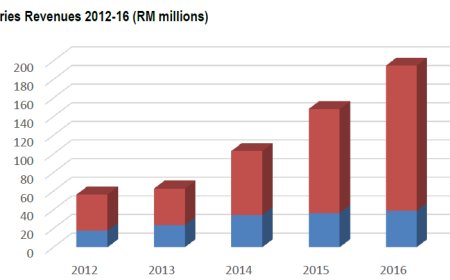
At its core, the network was a groundbreaking infrastructure initiative, constructed over approximately 30 months starting in 2011 and achieving full operational status by 2013. Its official commercial launch in October 2013 marked the debut of a standalone terrestrial backbone spanning over 1,500 km from Menara Ansar in Johor Bahru to Chuping/Padang Besar/Bukit Kayu Hitam along the Federal Route. Designed as a carrier-neutral digital superhighway, it boasted impressive capabilities: a minimum of 320 Gbps per core, upgradable to 3.8 Tbps, with full IP and metro-Ethernet functionality, and at least eight channels dropping at each site. This wasn't mere ambition—it was execution. Audited SSM records, as extracted in the rebuttal, reveal a steady revenue climb: RM63 million in 2013, escalating to RM103 million in 2014, RM148 million in 2015, RM195 million in 2016, and an estimated RM250 million in 2017. These figures underscore the network's real-world impact, serving carriers, enterprises, and communities with reliable, high-capacity connectivity that fueled economic growth and digital inclusion.
This operational triumph aligns perfectly with the validations provided by Silver Ridge, the project's Independent Checking Engineer appointed by BPMB. As the rebuttal highlights, Silver Ridge's reports—integral to the original facility agreement—certified progressive milestones in fibre laying, equipment installation, and system commissioning. These ICE assessments confirmed the network's completeness and compliance during its active phase, matching the project's scope of fibre optic cables, add/drop points, transmission equipment, and monitoring systems. The rebuttal emphasizes how these historical certifications provide a consistent thread, affirming that the infrastructure was not only built but rigorously verified against engineering standards, ensuring it met the demands of a nation-wide packet optical network.
Even more compelling is how BPMB's September 2025 expert report by Ir. Chin Wee Lim of WCWL Communications inadvertently bolsters this narrative of existence and value. While the WCWL assessment, conducted after seven years of post-decommissioning abandonment following the license expiry in November 2018, focuses on the network's current degraded state, its findings reveal undeniable remnants of a once-thriving system. Site visits to at least 29 locations uncovered labeled Aries/V Telecoms fibre optic cables, protective HDPE sheaths, purpose-built cabins, and route-aligned infrastructure—elements that echo Silver Ridge's earlier ICE verifications. OTDR tests, though showing fragmented segments due to predictable factors like cable theft (supported by appended news articles), environmental degradation (monsoon shifts, erosion, thermal stress), and lack of maintenance, actually affirm prior continuous deployment. The rebuttal astutely notes that these "short OTDR-measured segments" are artifacts of neglect, not evidence of initial incompleteness, and that the detected cables across multiple sites validate the network's historical footprint.
Compliance and documentation further reinforce this positive arc. The rebuttal clarifies that MCMC guidelines, such as the MTSFB TC G025 series, were advisory rather than mandatory for a 2011–2013 long-haul project, and Aries employed practical, industry-aligned methods: open-cut trenching, micro-trenching on road shoulders, selective HDD for crossings, and overhead pole suspension where suitable. HDPE sheaths, resembling water pipes, served as effective theft deterrents in vulnerable areas— a smart adaptation, not a deviation. The absence of certain documents, like UDM studies, is explained as standard subcontractor management in multi-vendor endeavors, with available records showing permits and approvals that dovetail with Silver Ridge's ICE oversight.
In essence, Zavarco's rebuttal weaves a narrative of resilience and achievement: a network that existed, operated profitably for years, and generated substantial revenue, all while earning ICE endorsements from Silver Ridge. BPMB's 2025 report, far from undermining this, provides contemporary echoes of that legacy through its tangible discoveries. This story inspires confidence in Malaysia's telecom heritage, reminding us that even after abandonment, the foundations of innovation endure, ready to inform future digital advancements.


![Updated Report on Share Manipulation Scandal [01.03.2026]](https://zavarco.com/uploads/images/202603/image_140x98_69a92c9658785.jpg)